Exterior House Render: Complete Guide to Creating Stunning Residential Visualizations
#Exterior House Render: Complete Guide to Creating Stunning Residential Visualizations
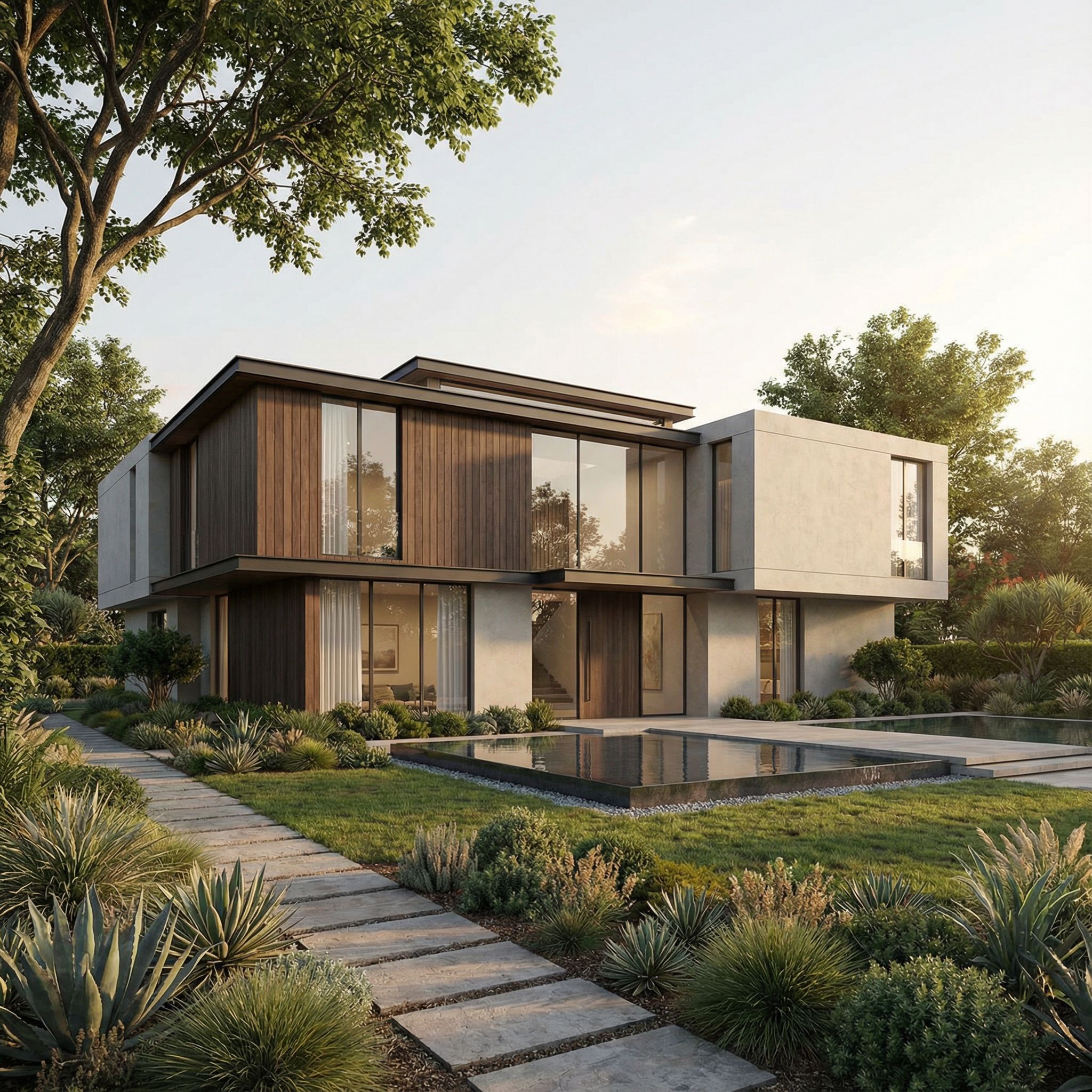
Creating compelling exterior house render visualizations is essential for architects, designers, and real estate professionals who need to communicate residential design concepts effectively. Whether you’re presenting to clients, marketing properties, or refining design details, mastering exterior house render techniques transforms your projects from concept to compelling reality.
An effective exterior house render goes beyond simple 3D modeling—it captures the essence of a home, showcases material choices, demonstrates how the building interacts with its environment, and helps viewers envision themselves in the space. This comprehensive guide covers everything you need to know about creating professional exterior house renders.
#Understanding Exterior House Render Fundamentals
#What Makes a Great Exterior House Render?
A successful exterior house render combines several key elements:
- Photorealism: The render should look like a professional photograph, not a computer-generated image
- Proper Lighting: Natural lighting that matches the time of day and weather conditions
- Material Accuracy: Realistic representation of building materials, textures, and finishes
- Environmental Context: Integration with surrounding landscape, sky, and neighborhood context
- Composition: Strategic camera angles that showcase the best features of the design
- Atmosphere: Mood and feeling that helps viewers connect emotionally with the space
#The Role of Exterior House Renders in Design Workflow
Exterior house renders serve multiple purposes throughout the design and marketing process:
- Design Development: Visualizing design options and making informed decisions
- Client Presentations: Communicating design intent clearly and persuasively
- Marketing Materials: Creating compelling visuals for sales and promotional materials
- Planning Approvals: Supporting planning applications with clear visual documentation
- Construction Documentation: Providing visual references for builders and contractors
#Essential Techniques for Exterior House Render Creation
#1. Model Preparation
Before rendering, ensure your 3D model is properly prepared:
- Clean Geometry: Remove unnecessary polygons and optimize mesh topology
- Proper Scale: Ensure all elements are correctly scaled relative to each other
- Complete Details: Include architectural details like trim, gutters, and hardware
- Material Assignment: Assign materials to all surfaces before rendering
- UV Mapping: Properly unwrap surfaces for realistic texture application
#2. Lighting Setup for Exterior House Renders
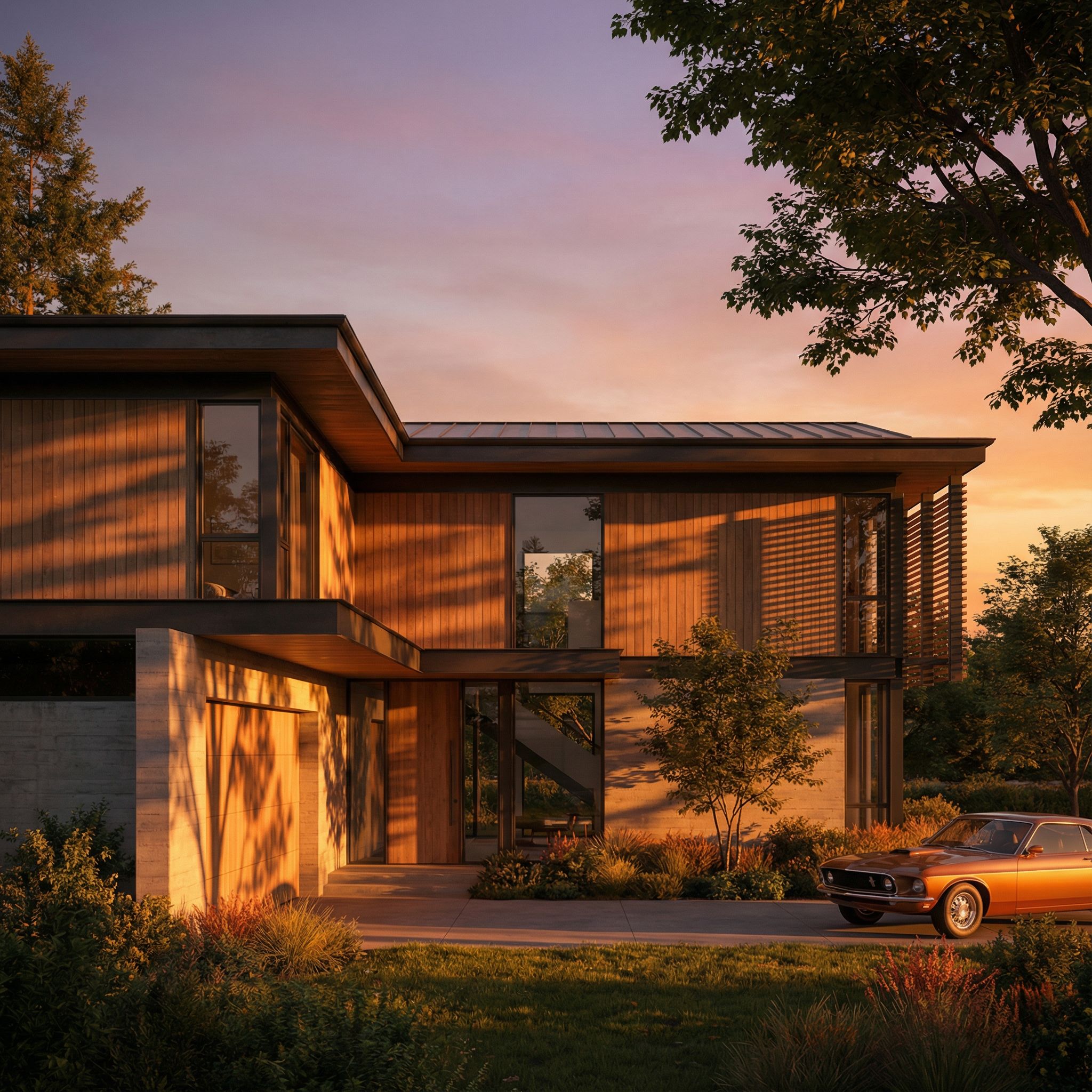
Lighting is crucial for creating realistic exterior house renders:
#Natural Lighting Scenarios
- Golden Hour: Early morning or late afternoon light creates warm, dramatic shadows
- Midday Sun: Bright, even lighting that showcases architectural details clearly
- Overcast Sky: Soft, diffused light that reduces harsh shadows
- Blue Hour: Twilight lighting that creates atmospheric, moody renders
#Artificial Lighting Integration
- Interior Lights: Warm interior lighting visible through windows adds life to the render
- Exterior Fixtures: Landscape lighting and architectural accent lights enhance nighttime renders
- Ambient Lighting: Subtle fill light prevents overly dark shadow areas
#3. Material and Texture Application
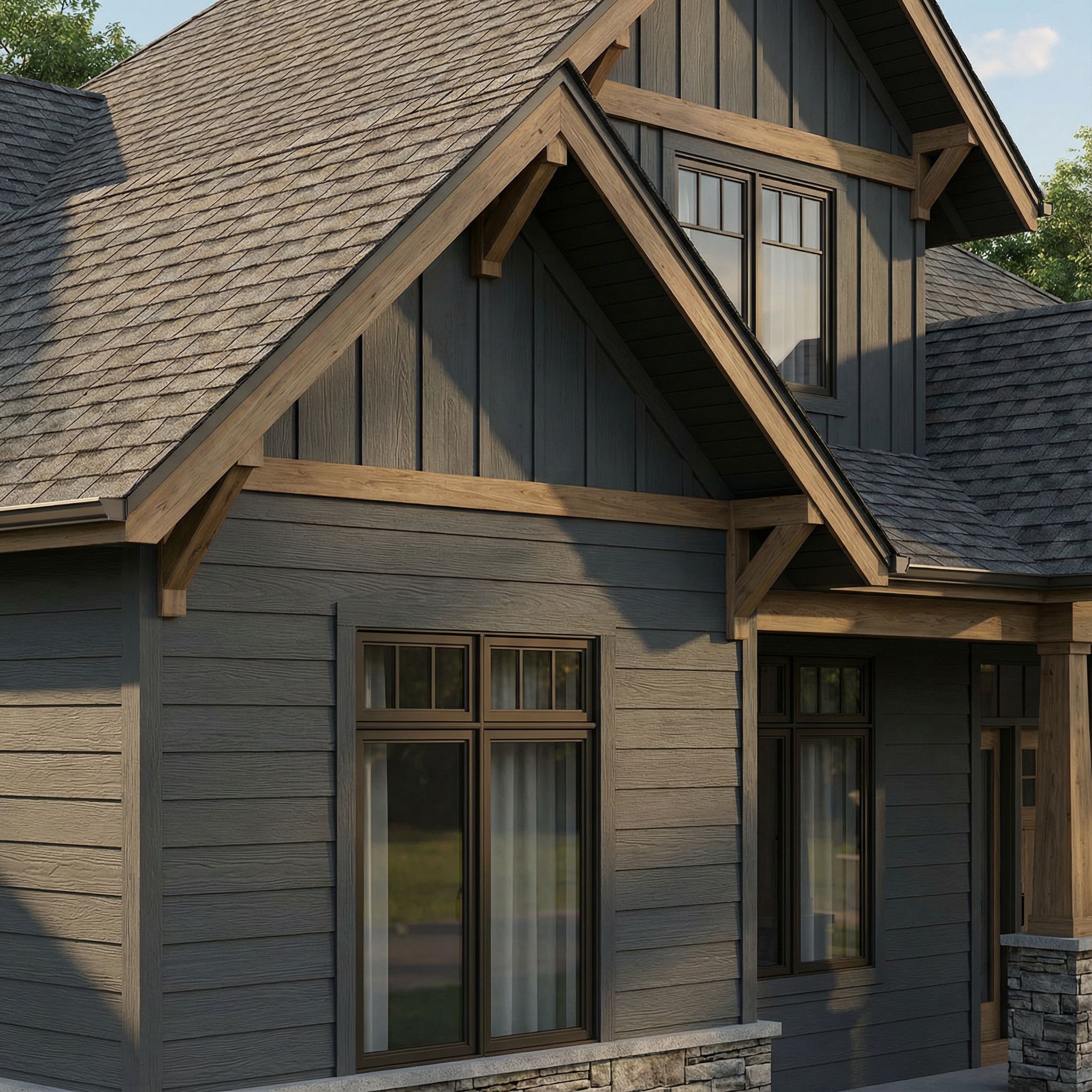
Realistic materials are essential for convincing exterior house renders:
#Common Residential Materials
- Siding Materials: Wood, vinyl, fiber cement, stucco, brick, stone
- Roofing: Asphalt shingles, metal, tile, slate, or modern flat roof materials
- Windows: Glass with proper reflections and transparency
- Trim and Details: Painted wood, composite materials, or metal accents
- Landscaping: Grass, plants, trees, and hardscaping materials
#Texture Best Practices
- Use high-resolution texture maps for close-up details
- Apply proper bump and normal maps for surface depth
- Consider weathering and wear for realistic aging
- Match material reflectivity to real-world properties
#4. Environmental Context
An exterior house render should feel integrated with its surroundings:
#Landscape Integration
- Terrain: Match site topography and grading
- Vegetation: Include appropriate trees, shrubs, and ground cover
- Hardscaping: Driveways, walkways, patios, and retaining walls
- Site Features: Fences, mailboxes, and other site elements
#Sky and Atmosphere
- Sky Textures: Use realistic sky HDRI maps or procedural sky systems
- Clouds: Appropriate cloud coverage for the desired mood
- Atmospheric Effects: Haze, fog, or atmospheric perspective for depth
- Time of Day: Match sky appearance to lighting conditions
#Advanced Exterior House Render Techniques
#Camera Composition and Angles
Strategic camera placement enhances your exterior house render:
- Eye-Level Views: Natural, relatable perspectives that viewers can easily understand
- Elevated Angles: Show roof details and site relationships
- Corner Views: Capture multiple facades in a single render
- Close-Up Details: Highlight specific architectural features or materials
- Wide Shots: Show the house in context with its surroundings
#Post-Processing and Enhancement
Post-processing can elevate your exterior house render:
- Color Grading: Adjust color temperature and saturation for mood
- Contrast Enhancement: Improve depth and visual impact
- Lens Effects: Subtle vignetting or lens flares for realism
- Atmospheric Effects: Add depth with atmospheric haze or fog
- People and Vehicles: Scale figures and vehicles for context (use sparingly)
#Rendering Settings Optimization
Efficient rendering settings balance quality and time:
- Resolution: Match output resolution to intended use (web vs. print)
- Sampling: Adjust quality settings based on final output requirements
- Render Elements: Render separate passes for flexibility in post-processing
- Denoising: Use AI-powered denoising for faster, cleaner renders
#Common Styles of Exterior House Renders
#Modern Contemporary
- Clean lines and minimal detailing
- Large windows and open spaces
- Neutral color palettes
- Emphasis on form and materiality
#Traditional
- Classic architectural details
- Symmetrical compositions
- Warm material palettes
- Emphasis on craftsmanship
#Transitional
- Blend of traditional and modern elements
- Balanced material choices
- Versatile appeal
- Contemporary comfort with classic character
#Luxury Estate
- High-end materials and finishes
- Extensive landscaping
- Multiple architectural elements
- Emphasis on grandeur and sophistication
#Best Practices for Exterior House Render Projects
#Pre-Render Checklist
Before starting your render, ensure:
- Model is complete and accurate
- All materials are assigned and textured
- Lighting setup matches desired time of day
- Camera angles are strategically chosen
- Environment and landscape are integrated
- Render settings are optimized for output
#Quality Control
During and after rendering:
- Review render passes individually for issues
- Check material accuracy and texture quality
- Verify lighting matches design intent
- Ensure proper scale of all elements
- Validate environmental integration
#Client Presentation Tips
When presenting exterior house renders:
- Show multiple angles and times of day
- Include both wide and detail shots
- Present material options side-by-side
- Use consistent lighting across all views
- Provide context for scale and surroundings
#Tools and Software for Exterior House Rendering
#3D Modeling Software
- SketchUp: User-friendly modeling with extensive plugin ecosystem
- Revit: BIM-focused tool for architectural documentation
- Rhino: Powerful NURBS modeling for complex forms
- Blender: Free, open-source option with robust rendering capabilities
#Rendering Engines
- V-Ray: Industry-standard photorealistic rendering
- Lumion: Real-time rendering with extensive material library
- Enscape: Real-time visualization integrated with modeling software
- Twinmotion: User-friendly real-time rendering solution
- AI-Powered Rendering: Modern tools that generate renders from sketches or models
#Post-Processing Software
- Photoshop: Industry standard for image editing and compositing
- Lightroom: Color grading and enhancement
- Affinity Photo: Professional alternative to Photoshop
#Troubleshooting Common Exterior House Render Issues
#Lighting Problems
- Too Dark: Increase ambient light or adjust exposure settings
- Too Bright: Reduce light intensity or add exposure compensation
- Harsh Shadows: Use softer light sources or add fill lighting
- Unrealistic Colors: Check color temperature and white balance settings
#Material Issues
- Too Reflective: Adjust material roughness and reflectivity
- Too Flat: Add bump maps or normal maps for surface detail
- Incorrect Scale: Verify texture mapping and UV coordinates
- Color Mismatch: Calibrate material colors to match real-world samples
#Composition Challenges
- Uninteresting Angle: Experiment with different camera positions
- Poor Framing: Use rule of thirds and leading lines
- Lack of Focus: Adjust depth of field to guide viewer attention
- Missing Context: Add surrounding environment and landscape elements
#Conclusion
Creating professional exterior house renders requires attention to detail, technical skill, and artistic vision. By mastering lighting, materials, composition, and environmental integration, you can produce visualizations that effectively communicate design intent and captivate viewers.
Whether you’re using traditional rendering workflows or exploring modern AI-powered tools, the principles of good exterior house rendering remain consistent: photorealism, proper lighting, accurate materials, and compelling composition. With practice and attention to these fundamentals, your exterior house renders will become powerful tools for design communication and client engagement.
Remember that every exterior house render tells a story. By carefully crafting each element—from the quality of light to the choice of materials—you create visual narratives that help clients and stakeholders envision not just a building, but a home.
#Ready to Create Your Own Exterior House Renders?
Transform your architectural sketches into stunning professional renders with Evermake. Our AI-powered platform makes it easy to create photorealistic exterior house renders in minutes, not hours. Start creating your renders today →